
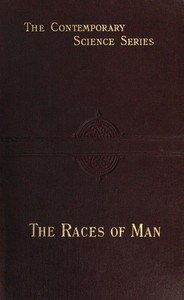
The Races of Man: An Outline of Anthropology and Ethnography by Joseph Deniker
The Story
This isn't a novel with a plot. Think of it as a time capsule from 1900. Joseph Deniker, a French naturalist, sets out to do what many scholars of his era tried: create a complete catalog of human types. He gathers data from explorers, museums, and his own travels. He breaks people down into 29 distinct 'races' and even more sub-groups, based on things like skull shape, nose width, skin color, and hair texture. He draws detailed maps showing where he thinks these groups live. The book is filled with measurements, descriptions, and a sincere belief that by classifying physical differences, we can understand humanity's story.
Why You Should Read It
Reading this book is a strange experience. On one hand, you can admire Deniker's effort. He was compiling a huge amount of information from a world that was still being fully explored by Western science. He often argues against the more extreme racist views of his time, insisting on the unity of the human species. But on the other hand, his entire project feels flawed from the start. Watching him strain to fit the incredible variety of humans into just 29 categories is like watching someone try to hold water in their hands. It's a powerful reminder that science is never separate from the culture that produces it. His 'facts' are filtered through the colonial mindset of his day. It makes you question what 'facts' we accept today without a second thought.
Final Verdict
This book isn't for everyone. It can be dry and technical. But if you're curious about the history of ideas, especially the history of racism and anthropology, it's a crucial primary source. It's perfect for readers who want to understand not just what people thought about race in the past, but *how* they thought about it. Don't read it for answers about human biology—read it to see how even smart, well-meaning people can build elaborate systems on concepts that later fall apart. It’s a humbling and ultimately enlightening look at a chapter of history we're still learning from.
You are viewing a work that belongs to the global public domain. It serves as a testament to our shared literary heritage.
Linda Moore
5 months agoThis digital copy caught my eye due to its reputation, the way it challenges the status quo is both daring and well-supported. It’s hard to find this much value in a single source these days.
Ashley Smith
4 months agoFinally found a version that is easy on the eyes.
Margaret Thomas
7 months agoI started reading this with a critical mind, it manages to maintain a consistent flow even when discussing difficult topics. A solid investment for anyone's personal development.
James Lee
11 months agoThought-provoking and well-organized content.





Thomas Jackson
7 months agoThe information is current and very relevant to today's needs.