
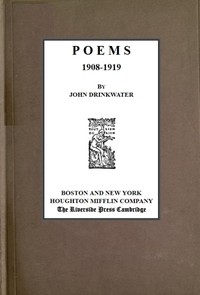
Poems, 1908-1919 by John Drinkwater
Let's clear something up first: this isn't a novel with a plot. Poems, 1908-1919 is a journey through one man's inner landscape during a time of massive outer change. Drinkwater arranges his poems like scenes from a thoughtful walk. You start in the calm, detailed beauty of rural England—its hills, farms, and old stone. Then, almost without you noticing, the light changes. The year 1914 arrives, and while Drinkwater never writes directly about trenches or gunfire (he was a pacifist), a new shadow falls across the page. The poems become quieter, more reflective, often focusing on memory, loss, and the search for lasting peace in a fractured world.
Why You Should Read It
I'll be honest, I picked this up expecting something maybe a bit dusty or overly formal. What I found was a voice that felt surprisingly direct and close. Drinkwater has this knack for making the ordinary feel sacred. A description of blacksmiths at work isn't just about metal; it's about the rhythm of honest labor. A poem about an old tree is really about standing firm through time.
What got me most was the quiet courage in his later poems. Faced with the chaos of World War I, he doesn't shout. He turns inward, writing about faith, art, and the small anchors that keep us human. It's a different kind of war poetry—one fought with hope and stillness instead of anger. Reading it felt less like studying literature and more like finding notes from a wise, calm friend who lived through scary times.
Final Verdict
This collection is perfect for anyone who loves nature writing, history seen through a personal lens, or poetry that speaks in a clear, accessible voice. If you enjoy the works of Edward Thomas or the early, pastoral side of Robert Frost, you'll feel right at home here. It's also a great pick if you're curious about the World War I era but want a perspective from the home front, full of contemplation rather than combat. Don't rush it. This is a book for a slow afternoon, a few poems at a time, letting the quiet music of a nearly forgotten voice settle in. It's a gentle, resilient companion from a not-so-gentle time.
You are viewing a work that belongs to the global public domain. You do not need permission to reproduce this work.
Anthony Gonzalez
8 months agoWow.
Paul White
5 months agoI have to admit, it manages to explain difficult concepts in plain English. This story will stay with me.
Donna Jackson
1 year agoFinally a version with clear text and no errors.
Karen Lewis
5 months agoA bit long but worth it.



Aiden Flores
1 year agoFast paced, good book.