
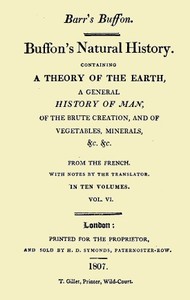
Buffon's Natural History. Volume 06 (of 10) by Buffon
Forget everything you think you know about old science books. Buffon's Natural History, Volume 6 isn't a dry catalog of facts. It's a grand, sprawling argument about life on Earth. Buffon, a French nobleman with a massive estate and an even bigger curiosity, spent decades compiling this work. This volume zooms in on a revolutionary idea for its time: that animals change.
The Story
There's no traditional plot here. Instead, Buffon takes you on a guided tour of his theory. He compares animals from the Old World and the New World, like pumas and lions, or llamas and camels. He looks at how climate, food, and what he calls 'domestication' (human influence) can alter a species over generations. He groups animals into families, suggesting a common origin for creatures that look different today. The 'story' is the thrilling and chaotic process of a brilliant mind trying to make sense of the natural world with the tools he had. You follow his logic, see his evidence, and witness him building a new way of thinking about biology, piece by piece.
Why You Should Read It
You should read this to see science in the making. It's humbling and exciting. Buffon gets so much wrong by our standards—he had no concept of evolution by natural selection or genetics. But he gets the big idea right: life is connected and it changes. Reading his passionate, detailed observations feels like having a conversation with history. You root for him when he's onto something and you understand why he stumbled where he did. It reminds you that knowledge isn't a list of answers, but a long, messy conversation. This book shows the first, bold sentences of that conversation.
Final Verdict
This is perfect for curious readers who love big ideas and a bit of intellectual adventure. If you enjoy history, science, or seeing how brilliant people think, you'll get a kick out of this. It's not a quick read; it's a slow, thoughtful one. Pair it with a modern book on evolution and your mind will be blown by the journey from then to now. For anyone tired of sanitized facts and wanting to see the raw, creative, and flawed process of discovery, Buffon's your guy.
Legal analysis indicates this work is in the public domain. You can copy, modify, and distribute it freely.
Jessica Moore
1 year agoThe balance between academic rigor and readability is perfect.
Karen Johnson
1 year agoI've gone through the entire material twice now, and the chapter on advanced strategies offers insights I haven't seen elsewhere. It’s a comprehensive resource that doesn't feel bloated.
Kimberly Brown
11 months agoComparing this to other titles in the same genre, the level of detail in the second half of the book is truly impressive. This has become my go-to guide for this specific topic.
Patricia Anderson
11 months agoExactly what I was looking for, thanks!





Mary Brown
8 months agoAs a professional in this niche, the visual layout and supporting data make the reading experience very smooth. Well worth the time invested in reading it.