
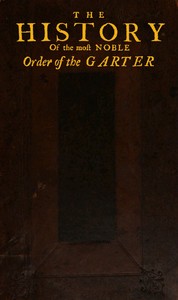
The History of the Most Noble Order of the Garter by Elias Ashmole
Let’s be clear from the start: this isn’t a novel. There’s no single plot with a beginning, middle, and end. Instead, think of it as the ultimate, obsessive guidebook to England’s oldest and most famous order of chivalry. Published in the 1670s, Elias Ashmole’s book is his life’s work. He wasn’t just writing history; he was trying to pin down and define a living tradition.
The Story
The book doesn’t tell a story so much as it builds a world. It starts with the legendary founding by King Edward III in the 1340s—the famous tale of the king picking up a lady’s lost garter and saying, "Honi soit qui mal y pense" (Shame on him who thinks evil of it). But Ashmole quickly moves past the myth. He lays out, in incredible detail, the entire structure of the Order: its statutes, its ceremonies (like the grand annual procession at Windsor Castle), the specific duties of its officers, and the biographies of every single knight from its founding up to his own time. He explains the symbols, the regalia, the Latin mottoes, and how membership became the highest honor a monarch could bestow.
Why You Should Read It
I loved this book because it’s a window into how power dressed itself up. This isn’t about raw military strength; it’s about creating an aura. The Garter’s rituals and exclusive membership were a tool for kings to reward loyalty and build a tight-knit elite around the throne. Reading Ashmole’s careful lists and descriptions, you feel the weight of tradition. You see how a simple piece of blue velvet became a symbol that connected a 17th-century duke directly back to the knights of the Hundred Years’ War. It’s a masterclass in the importance of image and ceremony in politics. Ashmole’s own passion is contagious—he treats a description of a knight’s collar with the same seriousness another writer might give a battle scene.
Final Verdict
This book is a specialist’s dream and a casual reader’s deep dive. It’s perfect for history buffs who geek out on primary sources, for anyone fascinated by royalty and ceremony, or for writers looking for authentic details about medieval and early modern elite culture. It’s not a light read—the language is old-fashioned and the detail is immense—but if you have the patience, it’s incredibly rewarding. You won’t find a more authoritative or passionate guide to the world of chivalric orders than Elias Ashmole. Just don’t expect a swashbuckling adventure; the adventure here is in the archives.
You are viewing a work that belongs to the global public domain. Knowledge should be free and accessible.
Elizabeth Harris
4 months agoAfter a thorough walkthrough of the table of contents, the logic behind each conclusion is easy to follow and verify. It’s a comprehensive resource that doesn't feel bloated.
Margaret White
2 years agoSolid information without the usual fluff.
Charles Perez
1 month agoAs a long-time follower of this subject matter, the inclusion of diverse viewpoints strengthens the overall narrative. Top-tier content that deserves more recognition.
Jennifer Rodriguez
6 months agoThe layout is perfect for tablet and e-reader devices.





Christopher Thomas
11 months agoThe layout of the digital version made it easy to start immediately, the insights into future trends are particularly thought-provoking. Top-tier content that deserves more recognition.